What Is Hydrolyzed Protein in Skincare?

Time:2026-09-27 Author:Henry
0%

Hydrolyzed protein appears on ingredient lists under names such as hydrolyzed wheat, silk, or rice protein. “Hydrolyzed” means the larger protein has been broken into smaller fragments. Those fragments can behave differently from intact proteins in a finished formula. In skincare, they are generally used to condition the skin or form a light film on its surface—not to rebuild the skin’s own proteins.

So, why is hydrolyzed protein popular in skincare products? It offers formulators a versatile ingredient that can contribute to a soft, smooth feel and support moisture retention. Picture a lotion spreading across dry hands: the formula may leave a fine, comfortable layer rather than a heavy coating. Results vary, though. The protein source, degree of hydrolysis, concentration, and overall formula all matter. One ingredient name cannot promise the same effect in every product.

Cosmetic chemist Perry Romanowski is known for emphasizing that ingredient performance depends on the finished formulation. A non-verbatim summary of that formulation-focused perspective is: “An ingredient’s name alone does not tell you how a product will perform.” That distinction matters here. Hydrolyzed protein is not automatically better than other conditioning ingredients, and “protein-rich” claims can sound more definitive than the evidence warrants. Some people may also prefer to avoid particular sources, such as wheat-derived ingredients, based on personal sensitivities or preferences. Read the full ingredient list. Look at the product’s stated purpose. And judge the formula on how it feels and performs for you—not on one impressive-sounding word.
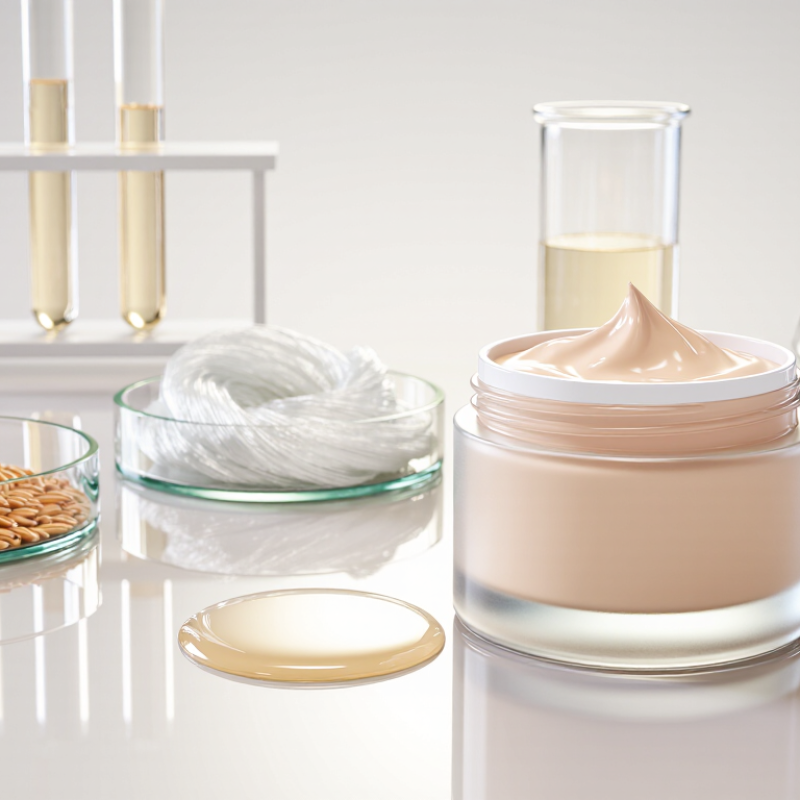
What Is Hydrolyzed Protein in Skincare?

What Hydrolyzed Protein Means in Skincare

What Is Hydrolyzed Protein in Skincare?

What Hydrolyzed Protein Means in Skincare

Hydrolyzed protein is protein broken into smaller fragments, usually through enzymes or chemical processing. Common sources include wheat, rice, silk, and collagen. The process does not create one standard ingredient: fragment size and composition can differ by source and manufacturer. That matters.

In a formula, these fragments may help attract water or leave a light film on the skin’s surface. The result depends on the full formula, the amount used, and whether the product stays on or is rinsed away. A serum that feels smoother is not proof that its peptides have rebuilt skin proteins or reached deeper tissue. Not magic.

Safety also depends on the specific ingredient and its use. The Cosmetic Ingredient Review Expert Panel’s 2014 assessment examined hydrolyzed wheat protein and hydrolyzed wheat gluten in cosmetics; it did not establish that every hydrolyzed protein behaves identically. Cosmetics Europe reported €96 billion in European cosmetics and personal-care retail sales in 2023. That market figure is context, not evidence of clinical benefit. I’d treat broad claims cautiously, especially when a label gives no source or supporting test data.

How Proteins Are Hydrolyzed for Cosmetic Use

What Is Hydrolyzed Protein in Skincare?

How Proteins Are Hydrolyzed for Cosmetic Use

Hydrolyzed proteins are created by splitting large protein chains into smaller peptides. This process uses water with enzymes, acids, alkalis, or controlled heat. Manufacturers carefully adjust time, temperature, and pH. These conditions affect peptide size, solubility, and skin feel.

After hydrolysis, the mixture is usually neutralized, filtered, concentrated, and dried. The resulting ingredient can dissolve more easily in a cream, cleanser, or hair product. Smaller peptides may attract water, support a smoother surface, or form a light conditioning film. However, “hydrolyzed” does not mean every peptide penetrates deeply. Molecular size still matters.

The label can sound more scientific than it really is. Protein source alone does not prove better performance. Testing should consider concentration, formulation, and actual skin response. Hydrolyzed collagen, for example, does not rebuild human collagen inside the skin. It mainly provides surface conditioning and moisture-related benefits.

Tips: Check the full ingredient list. Look for the specific protein source and product instructions. Apply a small amount first, especially if your skin reacts easily. Stop using it if persistent redness, burning, or itching appears. Also remember that peptide size is rarely shown on a cosmetic label, so product claims deserve careful review.

Common Hydrolyzed Proteins Found in Skincare

What Is Hydrolyzed Protein in Skincare?

Common Hydrolyzed Proteins Found in Skincare

Hydrolyzed proteins are proteins broken into smaller fragments, such as peptides. In skincare, wheat and soy proteins can help condition skin and leave a light, temporary film. Rice protein is used for similar conditioning effects. Hydrolyzed silk may create a smooth feel, while collagen and keratin ingredients mainly condition the skin’s surface. They do not replace or rebuild the skin’s own collagen or keratin. The precise feel depends on the ingredient and formula.

The Cosmetic Ingredient Review (CIR) safety assessment of hydrolyzed wheat protein and hydrolyzed wheat gluten reported 173 and 22 cosmetic uses, respectively, in 2012 FDA data. These are reported-use counts, not market share or proof of effectiveness. CIR assessed the ingredients’ safety as used in cosmetics; the assessment does not mean every person will tolerate every formula. Sensitive users should pay attention to their own reactions.

Tips: Check the ingredient list for the specific protein, and patch-test a new product on a small area. If wheat-derived products have caused you problems before, be cautious. A product can feel silky and still irritate your skin.

How Hydrolyzed Proteins Interact With Skin

Hydrolyzed proteins are proteins broken into smaller pieces through a process called hydrolysis. In skincare, these ingredients may come from sources such as wheat, rice, or silk. Their smaller fragments can spread across the skin more easily than intact proteins. They generally remain near the surface rather than rebuilding collagen deep within the skin. The name can sound more powerful than the effect.

At the surface, some hydrolyzed proteins help form a light film that reduces moisture loss and leaves skin feeling softer. Certain fragments also attract water, though the result depends on the formula and the surrounding ingredients. Think of the smooth feel after applying a well-formulated moisturizer, not a lasting structural change. Evidence and effects vary by protein type, concentration, and product. Irritation is possible, especially for sensitive skin, so a gentle approach matters.

Tips: Check the ingredient list and use the product as directed. Try a small patch first. If the skin feels tight, itchy, or unusually warm, stop using it and reassess. Also, compare the full formula—not just the hydrolyzed protein—when choosing a product.

Benefits, Limitations, and Safety Considerations

Hydrolyzed proteins are proteins broken into smaller fragments, often called peptides. In skincare, hydrolyzed collagen, silk, or wheat protein may help form a light film on the skin’s surface. This can reduce the feeling of dryness and leave skin temporarily smoother. The effect depends on the product’s full formula, not one ingredient alone. Not a rebuild. These proteins do not penetrate deeply enough to replace or rebuild collagen in the skin.

Tips: Apply a new product to a small area, such as the inner forearm, and watch for irritation over the next day or two. Patch testing cannot guarantee that a reaction will never occur, but it may flag an immediate problem. Use moisturizer if your skin feels tight, and stop using the product if burning or persistent redness develops.

Hydrolyzed proteins are not automatically suitable for every skin type. Fragrance, preservatives, or other ingredients in the same formula may be the cause of irritation. People with known allergies to a protein source should check the ingredient list and seek professional advice when uncertain. Evidence for lasting benefits from these ingredients remains limited; smoother-feeling skin is not proof of long-term repair. Formulation matters, and sometimes the simplest explanation is the right one.

FAQS

What is hydrolyzed protein in skincare?

It is protein broken into smaller fragments, often by enzymes or chemical processing. Sources may include wheat, rice, silk, or collagen. These ingredients are not identical.

What can hydrolyzed protein do for skin?

It may attract water and form a light surface film. Skin can feel softer and less dry for a while. The effect is temporary.

Can hydrolyzed protein rebuild collagen or repair deep skin?

No reliable evidence shows that it rebuilds deep skin collagen. Smoother skin does not prove deeper repair. That claim is easy to overstate.

Does fragment size matter?

Yes. Fragment size and composition can vary by source and manufacturer. Smaller does not automatically mean better. The whole formula matters more.

Is hydrolyzed protein suitable for every skin type?

No. Sensitive skin may react to the protein, fragrance, preservatives, or other ingredients. A simple formula can still cause trouble.

How should I test a product containing hydrolyzed protein?

Apply a small amount to the inner forearm. Watch the area for one or two days. Stop if burning or lasting redness appears. Patch testing helps, but it is not perfect.

What should people with protein allergies check?

Check the ingredient list for the protein source. Ask a qualified professional when the label is unclear. “Hydrolyzed” does not mean allergy-free.

Does a rinse-off product work like a serum?

Not necessarily. Contact time and the full formula affect the result. A rinse-off product may leave less time for a surface film. Maybe less dramatic.

Conclusion

Hydrolyzed proteins are proteins broken into smaller peptides and amino acids through processes such as enzymatic treatment or controlled chemical hydrolysis. In skincare, these ingredients may come from sources such as wheat, rice, silk, collagen, or keratin. Their smaller components can interact with the skin’s surface, where they may help attract or retain moisture and leave skin feeling smoother and more conditioned.

Why is hydrolyzed protein popular in skincare products? Its versatility makes it useful in formulas designed to support hydration, softness, and a temporarily improved feel or appearance. However, results depend on the specific protein, its concentration, and the overall formulation; these ingredients do not rebuild skin or permanently change its structure. Most are used topically, but sensitive individuals may experience irritation or an allergic reaction, particularly if they have sensitivities to the source material. Checking ingredient information and testing a new product on a small area can help users assess tolerance.

Henry

Henry

Henry is a dedicated marketing professional with a profound expertise in the company's offerings. With years of experience in the industry, he possesses an impressive understanding of the market dynamics and consumer behaviors that drive success. Henry is committed to sharing his insights through......