How Does Hydrolyzed Protein Compare to Amino Acids in 2026?

Time:2026-10-26 Author:Henry
0%

In 2026, the question “how does hydrolyzed protein compare to amino acids” matters more than ever. Athletes, older adults, and busy professionals increasingly choose faster, more targeted nutrition products. Hydrolyzed protein contains shorter peptide chains, created through enzymatic breakdown. Free amino acids require no further protein digestion. That difference sounds simple. Reality is less tidy.

Dr. Stuart Phillips, a leading protein-metabolism researcher, has repeatedly emphasized, “It is the amino acids in protein that stimulate muscle protein synthesis.” This principle provides a useful starting point, not a complete verdict. Hydrolyzed whey may deliver amino acids quickly while also supplying peptides and a broader protein profile. An amino-acid formula can offer precise amounts, such as leucine, but may provide fewer supporting nutrients. The best choice can depend on digestion, meal timing, training goals, and total daily protein intake.

A practical example helps. After training, one person may tolerate a hydrolyzed shake with water and feel satisfied. Another may prefer a small amino-acid drink because a full serving feels heavy. Neither response proves universal superiority. Individual experience matters.

So does speed always win?

Not necessarily.

Research often compares controlled doses, while real life includes sleep loss, mixed meals, stress, and inconsistent routines. That gap deserves attention. Hydrolyzed protein can be convenient, but it is not automatically more effective. Amino acids can be precise, but precision does not guarantee better results. This introduction examines digestion, absorption, muscle protein synthesis, cost, formulation quality, and practical use. It also questions marketing claims, because “faster” is not always the same as “better.”
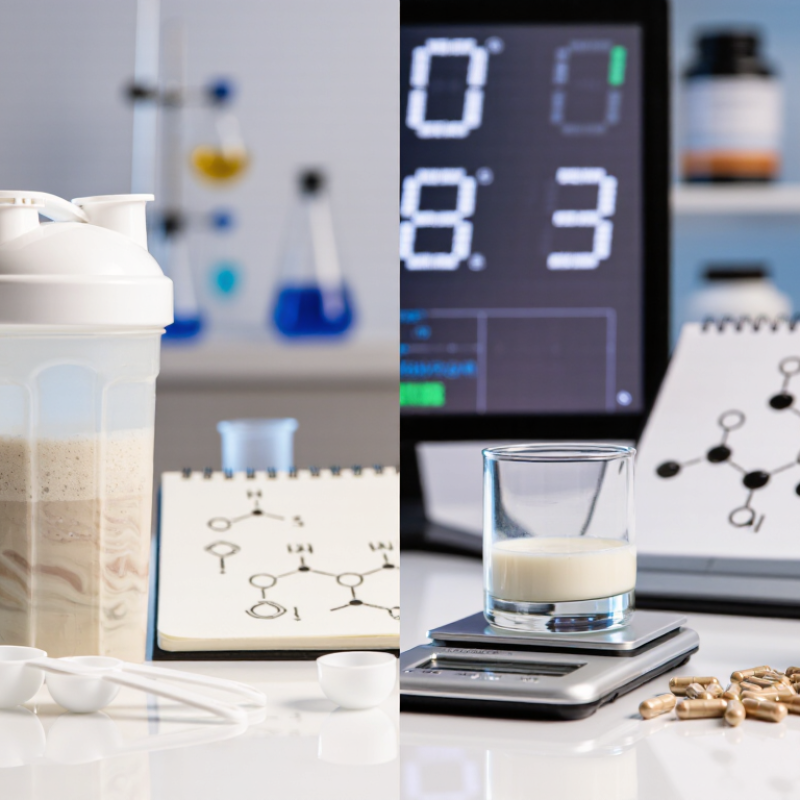
How Does Hydrolyzed Protein Compare to Amino Acids in 2026?

Hydrolyzed Protein vs. Amino Acids: Definitions, Forms, and 2026 Scope

Hydrolyzed protein is a larger protein broken into shorter peptide chains through enzymes or controlled processing. Amino acids are the individual building blocks of protein. The difference sounds simple, yet product labels often blur it. Hydrolyzed powders may contain peptides, free amino acids, minerals, and flavoring ingredients. Amino acid formulas usually list specific compounds, such as leucine, glycine, or a complete essential amino acid blend.

Their forms also affect use. Hydrolyzed protein commonly appears as a powder mixed with water, milk, or a recovery drink. It may digest more easily than intact protein, although personal tolerance varies. Amino acids can come as capsules, tablets, powders, or ready-to-drink liquids. A single amino acid offers targeted intake, while a complete blend provides broader coverage. Neither form automatically produces better results.

In 2026, the comparison should include digestion, protein quality, dosage, testing, and the user’s diet. A person eating enough complete protein may gain little from extra isolated amino acids. Someone with limited appetite may prefer a smaller hydrolyzed serving. Evidence still does not support treating supplements as substitutes for balanced meals. The research is useful, but not perfectly consistent. Real-world response can differ because sleep, training, health status, and total energy intake matter. I would also question unusually precise absorption claims without transparent methods, independent testing, and clear ingredient amounts.

How Does Hydrolyzed Protein Compare to Amino Acids in 2026?

Hydrolyzed Protein vs. Amino Acids: Definitions, Forms, and 2026 Scope

How to read the chart: A free amino acid is one individual residue. A dipeptide contains two residues, an oligopeptide contains at least three, and a polypeptide contains more than ten. Hydrolyzed protein is a mixture produced by breaking intact proteins into peptides and sometimes free amino acids, so its exact chain-length distribution depends on the raw material and degree of hydrolysis. It should not be treated as identical to a free-amino-acid product.

The values show scientifically defined minimum residue counts for each molecular form; they are not a percentage-composition claim for any specific product.

Protein Quality Compared Through FAO’s DIAAS Evaluation Framework

How Does Hydrolyzed Protein Compare to Amino Acids in 2026?

FAO’s DIAAS framework evaluates protein quality through digestible indispensable amino acids. It measures digestion at the end of the small intestine, not only nitrogen absorption. Each amino acid is compared with an age-specific reference pattern. The lowest result identifies the limiting amino acid. This approach is more precise than older scoring methods.

Hydrolyzed protein contains shorter peptide chains created through enzymatic breakdown. This may support faster digestion and easier tolerance for some people. However, hydrolysis does not automatically improve its DIAAS value. The source protein still determines its amino acid balance and digestibility. A hydrolyzed protein low in lysine, for example, may remain limited by lysine.

Free amino acids are already separated and require no peptide breakdown. Their absorption can be rapid. Yet DIAAS is designed mainly for protein foods and protein ingredients, not every isolated amino acid formula. A balanced amino acid mixture might perform differently from an intact protein. Its value depends on proportions, timing, total intake, and the body’s ability to use them together. Laboratory results also cannot capture every real-world factor, including exercise, illness, or meal composition. This is where interpretation becomes imperfect. More testing would help.

How Does Hydrolyzed Protein Compare to Amino Acids in 2026? - Protein Quality Compared Through FAO’s DIAAS Evaluation Framework

Evaluation Dimension Hydrolyzed Protein Free Amino Acids DIAAS-Relevant Interpretation
Basic definition Protein that has been enzymatically or chemically broken into shorter peptides, while retaining amino acids in peptide-bound form. Individual amino acids supplied in their unbound form rather than as intact proteins or peptides. DIAAS is primarily designed to evaluate the quality of dietary proteins and protein sources, not isolated amino acids as conventional proteins.
Amino acid composition Usually remains essentially the same as the original protein unless processing causes oxidation, chemical damage, or losses of specific amino acids. Can be deliberately formulated to provide selected amino acids, such as leucine, lysine, or a complete essential-amino-acid profile. Protein quality depends on the amount of each indispensable amino acid relative to the FAO reference pattern; hydrolysis alone does not automatically improve the amino acid profile.
Primary nitrogen form Mostly peptide-bound amino acids, ranging from small peptides to larger peptide fragments. Free amino acids, generally present as individual molecules. The DIAAS calculation is based on digestible indispensable amino acid content, so the chemical form and measurement method must be clearly reported.
Protein digestion requirement Requires further gastrointestinal digestion, although shorter peptides may be hydrolyzed more rapidly than intact proteins. Does not require proteolysis to release the individual amino acids, but intestinal transport and metabolism still occur. A faster appearance of amino acids in blood is not the same as a higher DIAAS. DIAAS evaluates amino acid adequacy and ileal digestibility, not speed alone.
FAO reference pattern: adults, mg indispensable amino acid per g protein The same reference pattern applies when assessing a protein source. The 2013 FAO adult reference values are: histidine 15, isoleucine 30, leucine 59, lysine 45, sulfur amino acids 22, aromatic amino acids 38, threonine 23, tryptophan 6, and valine 39 mg/g protein. The lowest indispensable-amino-acid ratio is the limiting amino acid score before adjustment for true ileal digestibility.
DIAAS calculation principle DIAAS is calculated from the digestible amount of each indispensable amino acid, divided by the corresponding FAO reference value, with the lowest ratio determining the score. A free-amino-acid mixture may not be directly comparable with a conventional protein DIAAS because it is not a protein source in the usual analytical sense. DIAAS = 100 × the lowest [digestible indispensable amino acid content ÷ reference-pattern content]. The result is not a measure of total protein quantity or absorption speed.
DIAAS quality categories A hydrolyzed protein may fall into any category because its score depends mainly on the original amino acid pattern and measured ileal digestibility. No universal DIAAS category should be assigned without a clearly defined protein-equivalent basis and appropriate digestibility data. FAO interpretation: ≥100 = excellent quality; 75–99 = good quality; <75 = low quality. These thresholds should not be used to claim that hydrolysis alone changes quality.
Likely limiting amino acid The limiting amino acid is generally inherited from the original protein source. Hydrolysis does not normally correct an amino acid deficiency. The limiting amino acid depends on the formulation. A mixture can be designed to avoid a low indispensable-amino-acid ratio, but excess amino acids do not substitute for missing essential amino acids. The lowest indispensable-amino-acid ratio controls the DIAAS result; a high leucine content alone cannot establish a high DIAAS.
Digestibility measurement Requires amino-acid-specific true ileal digestibility values for a scientifically valid DIAAS calculation. Standard protein digestibility testing may not describe the behavior of a free-amino-acid mixture accurately. DIAAS uses true ileal digestibility of each indispensable amino acid rather than fecal nitrogen digestibility alone.
Expected absorption pattern Shorter peptides can be absorbed as peptides or after breakdown into amino acids; the exact response depends on peptide size, dose, food matrix, and individual physiology. Individual amino acids can be absorbed without first breaking peptide bonds, but absorption rates differ among amino acids and formulations. Absorption kinetics are a separate dimension from DIAAS and should be reported separately from protein-quality scores.
Effect of processing Hydrolysis may improve solubility and reduce the size of peptide fragments, but severe processing can damage amino acids such as lysine through chemical reactions. Free-form ingredients may be chemically stable or unstable depending on storage, pH, moisture, oxygen exposure, and the specific amino acid. The final score should be based on the finished product, not assumed from the unprocessed source.
Best comparison statement Hydrolyzed protein is still evaluated as a protein source; hydrolysis may alter digestion characteristics but does not inherently raise its DIAAS. Free amino acids can provide targeted amino acids, but they should not automatically be described as having a higher DIAAS than a complete protein. For a valid 2026 comparison, report amino acid composition, true ileal digestibility, processing conditions, serving dose, and the calculation basis.

Method note: DIAAS is a protein-quality framework developed by FAO that compares digestible indispensable amino acids with age-specific reference patterns. A hydrolyzed protein should not be assumed to have a higher DIAAS solely because it is hydrolyzed, and isolated free amino acids require careful qualification before being compared with conventional protein sources.

Absorption and Muscle Protein Synthesis: Leucine’s 2–3 g Trigger Range

Hydrolyzed protein and free amino acids can both support muscle protein synthesis, but they behave differently after ingestion. Hydrolyzed protein contains shorter peptide chains, which may leave the stomach faster than intact protein. Free amino acids require less digestion. Faster does not automatically mean better.

Leucine remains the key signal. A practical target is about 2–3 grams per feeding, especially after resistance training. This range may help activate muscle protein synthesis in many adults. However, leucine works best with the other essential amino acids. Leucine alone can press the start button, but it cannot supply all the building materials.

A serving of protein may reach this range, though the amount varies with its amino acid profile. A mixed meal also changes absorption speed. Fat, fiber, and digestion can slow the appearance of amino acids in the blood. That is not necessarily harmful. Sustained availability may matter more than a sharp peak.

In real use, hydrolyzed protein may suit someone wanting lighter digestion or convenient post-training nutrition. Free amino acids may be useful when a complete protein serving feels too heavy. Yet the evidence does not show that faster absorption consistently creates greater muscle growth. That distinction is easy to miss.

The 2–3 gram leucine target is useful, not sacred. Age, training status, meal size, and total daily protein can shift the response. I would treat it as a practical guide, not a guarantee. The cleanest theory is not always the cleanest result.

Safety, Allergens, and Labeling Under FDA Dietary-Supplement Standards

How Does Hydrolyzed Protein Compare to Amino Acids in 2026?

Under FDA dietary-supplement standards, hydrolyzed protein and free amino acids face the same basic safety expectations. Manufacturers must ensure products are reasonably safe before marketing. FDA does not approve most supplements before sale. The National Institutes of Health also stresses that companies remain responsible for product safety and truthful labeling.

Hydrolyzed protein is broken into smaller peptides. It may still contain allergenic protein fragments. A milk-derived hydrolysate can matter to consumers avoiding milk proteins. Free amino acids usually contain no intact protein, but processing aids, capsules, and flavor systems may introduce allergens. Check the “Contains” statement and ingredient list. Sesame has been a major allergen requiring labeling since January 2023. Cross-contact warnings remain inconsistent, which is frustrating.

Read the label closely.

FDA rules require identity, net quantity, Supplement Facts, and ingredient disclosures. Structure/function claims need substantiation and an FDA notification after marketing. They are not preapproval seals. The 2024 Council for Responsible Nutrition consumer survey reported that 75% of U.S. adults use dietary supplements, increasing the importance of clear wording.

“Amino acid blend” can hide individual amounts. “Hydrolyzed” does not automatically mean hypoallergenic. That assumption deserves more caution.

Independent testing can help verify identity, contaminants, and label accuracy, but testing is not universal. Consumers should ask about source proteins, allergen controls, lot testing, and adverse-event reporting procedures before choosing either format.

2026 Use Cases, Cost Trends, and Evidence-Based Selection Criteria

In 2026, selection should follow the use case, not the louder nutrition claim. Hydrolyzed protein contains shorter peptides, minerals, and other food components. Free amino acids provide a narrower, more predictable formula. That distinction matters for hospitals, older adults, and people managing poor appetite. It matters less for a healthy user meeting daily protein needs.

Cost signals remain mixed. Grand View Research estimates the global sports nutrition market could reach about USD 83 billion by 2028, with protein products driving much of the expansion. Processing costs complicate the comparison. Hydrolysis adds enzymes, filtration, drying, and quality testing. Amino acids can be expensive individually, but commodity-scale production may lower selected inputs. Compare cost per gram of nitrogen or target amino acid, not cost per scoop.

Evidence should guide the purchase. The FAO protein-quality framework favors digestibility and essential amino acid availability, while the International Society of Sports Nutrition supports complete proteins for muscle protein synthesis. Amino acids may suit precise fortification or restricted formulas. Hydrolysates may offer better texture and faster dispersion. “Faster” is not always clinically better. Some studies use small samples, short timelines, or sponsored formulations. That weakness deserves attention. Evaluate amino acid profiles, digestibility data, contamination testing, processing transparency, and price stability across suppliers.

FAQS

What does the DIAAS framework measure?

DIAAS measures digestible indispensable amino acids at the end of the small intestine. Each amino acid is compared with an age-specific reference pattern. The lowest result identifies the limiting amino acid. It is more precise than older scoring methods.

Does hydrolyzed protein automatically have a higher DIAAS value?

No. Hydrolysis shortens peptide chains through enzymatic breakdown. It may support faster digestion or easier tolerance for some people. However, the original protein source still controls amino acid balance. A product low in lysine may remain limited by lysine. Not automatically better.

How do free amino acids differ from hydrolyzed protein?

Free amino acids are already separated and need no peptide breakdown. Their absorption may be rapid. Hydrolyzed protein still contains shorter peptide chains. The body may use these formats differently, depending on proportions and total intake.

Is DIAAS suitable for every amino acid formula?

DIAAS is designed mainly for protein foods and protein ingredients. It does not fully evaluate every isolated amino acid formula. A balanced mixture may behave differently from intact protein. Timing, proportions, and combined use can affect interpretation. The comparison is imperfect.

Can laboratory results predict real-world outcomes completely?

No. Laboratory results cannot capture every factor affecting amino acid use. Exercise, illness, and meal composition may change the outcome. Two people may respond differently to the same serving. More testing would improve confidence. Results are not the whole story.

Can hydrolyzed protein still contain allergens?

Yes. Hydrolysis does not remove every allergenic protein fragment. A milk-derived hydrolysate may still matter to people avoiding milk proteins. “Hydrolyzed” does not automatically mean hypoallergenic. Check the source protein and allergen statement carefully.

Are free amino acids always free from allergens?

Not necessarily. Free amino acids usually contain no intact protein. However, capsules, processing aids, and flavor systems may introduce allergens. Cross-contact warnings can also be inconsistent. Review the ingredient list and “Contains” statement. Read the label closely.

What information should a supplement label provide?

A compliant label should identify the product, net quantity, and serving details. It should include Supplement Facts and ingredient disclosures. An “amino acid blend” may hide individual amounts. Structure/function claims require supporting evidence and regulatory notification after marketing. They are not preapproval seals.

How can consumers compare product quality more carefully?

Ask about protein sources, allergen controls, lot testing, and adverse-event procedures. Independent testing may verify identity, contaminants, and label accuracy. Testing is not universal, so uncertainty remains. A clear label helps, but it cannot answer everything. Some judgment is still required.

Conclusion

How does hydrolyzed protein compare to amino acids? Hydrolyzed protein is a whole protein that has been partially broken into smaller peptides, while amino acid products provide individual building blocks directly. Their nutritional value depends on the complete amino acid profile, digestibility, and intended use. The FAO’s DIAAS framework offers a useful way to assess protein quality by considering the digestibility of essential amino acids. For muscle protein synthesis, leucine is especially important, with approximately 2–3 grams often discussed as a practical trigger range when total protein intake is adequate.

In 2026, selection should also consider absorption speed, dietary goals, allergies, flavor, convenience, and cost. Hydrolyzed protein may provide a broader nutrient profile, whereas free-form amino acids can be useful when targeted intake or rapid consumption is preferred. Consumers should review ingredient lists, allergen statements, serving sizes, and labeling compliance under applicable FDA dietary-supplement standards. Evidence-based choices should prioritize verified composition, appropriate dosing, and overall daily protein intake rather than marketing claims alone.

Henry

Henry

Henry is a dedicated marketing professional with a profound expertise in the company's offerings. With years of experience in the industry, he possesses an impressive understanding of the market dynamics and consumer behaviors that drive success. Henry is committed to sharing his insights through......