China Top 10 Hydrolyzed Protein Suppliers How Is It Made

Time:2026-11-09 Author:Henry
0%

Hydrolyzed protein appears in sports nutrition, clinical foods, pet food, and flavor systems. Its production breaks larger proteins into smaller peptides and amino acids. Buyers comparing China’s leading suppliers should look beyond price. Raw-material origin, hydrolysis method, peptide profile, and batch consistency all matter.

MarketsandMarkets estimates the wider protein ingredients market at USD 61.8 billion in 2024, forecasting USD 92.2 billion by 2029. This broad category is not a hydrolyzed-protein market estimate, but it signals sustained commercial interest. The practical question is how is hydrolyzed protein extracted from natural sources? Manufacturers typically select materials such as whey, soy, fish, or collagen, then use enzymes or controlled acid treatment to split protein chains. Filtration, concentration, and drying produce a powder or liquid ingredient. Details differ by source.

Small process changes matter.

Temperature, pH, and reaction time can affect solubility, taste, and peptide size. A supplier’s specification sheet should identify the source, protein content, moisture, and relevant quality tests. Ask how production batches are monitored, and request documentation that supports traceability and consistent testing. These checks help distinguish a capable manufacturer from a trading company with limited process visibility. Supplier claims still need verification.

This guide introduces ten China-based suppliers and the questions worth asking before procurement. It considers product range, manufacturing evidence, certifications, and communication—not just catalogue breadth. No ranking can replace a site audit or sample testing. That limitation deserves attention. A polished brochure is not proof of stable production.
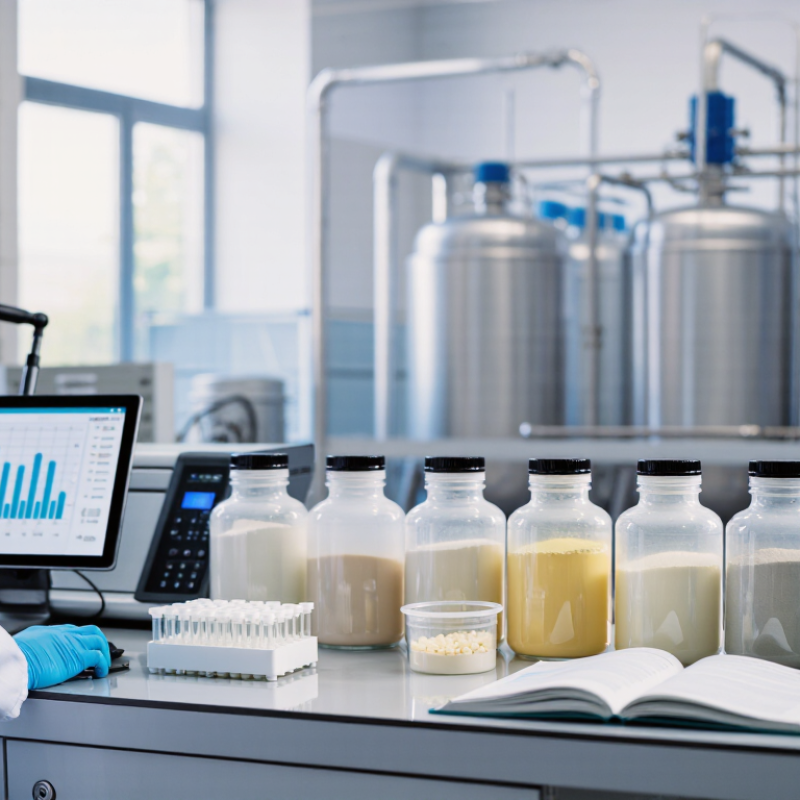
China Top 10 Hydrolyzed Protein Suppliers How Is It Made

What Hydrolyzed Protein Is and How It Differs from Intact Protein

Hydrolyzed protein is protein broken into smaller peptides and amino acids through hydrolysis. Proteins are naturally long chains of amino acids linked by peptide bonds. In production, enzymes or controlled chemical conditions split some of those bonds. The resulting ingredient may dissolve more easily and taste different from its intact counterpart. Not magic.

The degree of hydrolysis matters. A lightly hydrolyzed protein retains longer peptide chains, while more extensive processing creates smaller fragments. This can affect bitterness, texture, and digestion, but it does not automatically make the protein more nutritious. Intact protein keeps its longer chains until digestion breaks them down. Both forms can provide essential amino acids; the body’s response depends on the ingredient and the person consuming it. Hydrolyzed forms may be useful when rapid mixing or a specific texture is desired, though faster digestion is not guaranteed to matter in everyday use. A practical check is the ingredient description and protein content, not the word “hydrolyzed” alone. Formulation details are easy to overlook.

Raw Materials and Enzymes Used in Protein Hydrolysis

Protein hydrolysis starts with a protein-rich raw material and a suitable protease. Whey, casein, soy, and pea proteins are common choices, while collagen-rich materials serve different applications. Each source behaves differently in water and under heat. Small detail, big effect. A powder that disperses slowly can form stubborn clumps, making enzyme contact uneven. Raw-material specifications should therefore cover protein content, moisture, and relevant allergens, not just price.

Proteases may come from microbial, plant, or animal sources. Microbial enzymes are often selected for consistent activity, while papain and bromelain are plant-derived options. Pepsin and trypsin have specific working conditions. Processors control temperature, pH, mixing, and reaction time to shape peptide size and taste. A warm tank and a calibrated pH meter are practical safeguards, but neither guarantees a uniform product. Enzyme choice matters. So does the protein batch. One awkward reality is that two lots of the same crop may hydrolyze differently. Testing degree of hydrolysis, solubility, and sensory properties helps verify results. Supplier records and clear enzyme activity data make comparisons more reliable.

How Hydrolyzed Protein Is Made: From Preparation to Drying

Hydrolyzed protein production starts with selecting and inspecting a suitable protein-rich material. The source is cleaned, milled, and mixed with water to form a pumpable slurry. Small details matter. Particle size and water quality can affect how evenly the material is processed.

Food-grade enzymes are added under controlled conditions. Temperature, acidity, mixing speed, and processing time influence how proteins break into smaller peptides. Operators monitor these conditions and test samples, since the same settings may not work equally well for every raw material. Once the desired degree of hydrolysis is reached, heat treatment or another validated method stops enzyme activity. The mixture may then be filtered to remove insoluble particles and concentrated by removing some water.

Drying turns the concentrated liquid into a stable powder. Spray drying is common: fine droplets meet hot air, and moisture evaporates quickly inside the dryer. The powder is then cooled, screened, and packed in moisture-resistant packaging. Drying conditions need careful control; excessive heat can affect solubility, color, or flavor. A powder that looks consistent is not enough evidence of quality, so moisture, protein content, and particle size should also be checked. No single recipe fits every application.

Quality Standards and Applications of Hydrolyzed Protein

Hydrolyzed protein quality is not measured by protein percentage alone. Buyers typically assess amino acid composition, digestibility, moisture, ash, microbial results, and batch-to-batch consistency. Enzyme choice and hydrolysis time affect peptide size, bitterness, solubility, and heat stability. A powder that dissolves quickly in a clear drink may perform poorly in a baked product. Small pilot batches can reveal this early. Still, supplier specifications vary, and a tidy certificate cannot replace testing the finished food.

The FAO’s 2013 report, Dietary Protein Quality Evaluation in Human Nutrition, describes DIAAS, which evaluates digestible indispensable amino acids. It classifies scores below 75 as having no protein-quality claim, 75–99 as good, and 100 or above as excellent. These figures guide nutritional assessment; they are not universal purchasing limits for every hydrolysate.

For beverages, formulators often prioritize solubility and mild flavor. In nutrition products, amino acid balance and verified microbial controls may matter more. Not enough by itself. Degree of hydrolysis can help explain functionality, but it does not prove nutritional superiority. Sensory checks and validated laboratory methods remain essential, and this is where specifications sometimes need a second look.

China’s Top 10 Hydrolyzed Protein Suppliers and How to Choose One

Choosing among China’s top hydrolyzed protein suppliers takes more than comparing prices. Grand View Research estimated the global hydrolyzed protein market at USD 1.1 billion in 2022, with projected growth of 6.4% annually from 2023 to 2030. That growth makes supplier claims worth checking carefully. Ask for a recent certificate of analysis, raw-material origin, protein content, and batch-to-batch test results. Details matter.

For a practical review, check how the supplier controls hydrolysis, drying, and contamination risks. Request evidence for amino-acid composition, solubility, microbial limits, and allergen handling. FAO’s 2013 report, Dietary Protein Quality Evaluation in Human Nutrition, recommends DIAAS as a method for assessing protein quality using digestible indispensable amino acids. Ask whether testing supports the intended application, rather than relying on a generic “high quality” label. A small pilot batch can reveal bitter notes, poor dissolution, or inconsistent texture before a larger order. Not every supplier will share equally complete records; that should prompt further questions, not an automatic rejection.

China’s Top 10 Hydrolyzed Protein Suppliers and How to Choose One

A practical, non-ranked guide to evaluating suppliers and understanding how hydrolyzed protein is made.

No. Supplier Evaluation Dimension What to Check Why It Matters
1 Protein source Confirm the raw material, such as soy, wheat, pea, fish, or collagen, and its origin. Source affects allergen status, amino-acid profile, flavor, and suitability for the intended application.
2 Hydrolysis method Ask whether the protein is hydrolyzed with enzymes or by chemical methods, and request process details. Enzymatic hydrolysis uses proteases to break peptide bonds under controlled conditions; the method can influence the resulting peptide profile and flavor.
3 Degree of hydrolysis Request the degree-of-hydrolysis specification, test method, and batch-to-batch range. The extent of peptide-bond cleavage helps characterize the hydrolysate and can affect solubility, taste, and functional performance.
4 Protein and peptide profile Review protein content and, when relevant, peptide molecular-weight distribution and amino-acid information. These specifications help buyers compare products for nutrition, formulation, or other defined uses.
5 Solubility and application performance Test solubility under the pH, temperature, concentration, and mixing conditions of your process. Performance depends on both the product and the final formulation; supplier data should be confirmed in application trials.
6 Flavor, color, and odor Request a representative sample and assess it in the intended food, feed, or industrial formulation. Raw-material choice and processing conditions can affect sensory properties, so a specification alone may not predict the final result.
7 Purification and drying Ask about enzyme inactivation, filtration or other separation steps, concentration, and drying method. A typical process may include hydrolysis, enzyme inactivation, separation, concentration, and drying; the actual sequence varies by product and process.
8 Quality and food-safety controls Review the current quality-system certificates, hazard controls, traceability procedures, and relevant test reports. Verify that documents apply to the manufacturing site and product, and that testing meets the requirements of your destination market.
9 Allergens and regulatory documentation Obtain an ingredient statement, allergen declaration, product specification, safety data where applicable, and export documents required for your market. Requirements differ by source and jurisdiction; buyers should check applicable local rules rather than assume one document set is sufficient.
10 Commercial and supply capability Confirm sample availability, minimum order quantity, lead time, packaging, shelf life, storage conditions, and change-control practices. These details help determine whether a supplier can support trials, routine orders, and consistent supply at the required scale.

FAQS

Which protein sources are commonly hydrolyzed?

Whey, casein, soy, and pea proteins are common choices. Collagen-rich materials serve other applications. Each behaves differently in water and heat.

Why does raw-material consistency matter?

Check protein content, moisture, and relevant allergens. Slowly dispersing powder can form stubborn clumps, making enzyme contact uneven. Small detail, real consequence.

What types of proteases can be used?

Proteases may come from microbial, plant, or animal sources. Papain and bromelain are plant-derived options. Pepsin and trypsin need specific working conditions.

Which process conditions affect hydrolysis?

Temperature, pH, mixing, and reaction time help shape peptide size and taste. A warm tank and calibrated pH meter are useful safeguards. Not guarantees.

How is hydrolyzed protein quality assessed?

Protein percentage alone is not enough. Buyers may check amino acid composition, digestibility, moisture, ash, microbial results, and batch consistency. Taste matters too.

What does DIAAS indicate?

A 2013 FAO report describes DIAAS as a method based on digestible indispensable amino acids. Scores below 75 indicate no protein-quality claim; 75–99 are good, and 100 or higher are excellent. These are not universal purchasing limits.

How can buyers check whether a hydrolysate suits an application?

A powder that dissolves in a clear drink may perform poorly in baked products. Test a small pilot batch for bitterness, texture, and solubility. I would still retest it.

What should buyers request from a supplier?

Ask for a recent certificate of analysis, raw-material origin, protein content, and batch test results. Check amino acids, solubility, microbial controls, and allergen handling. A tidy certificate is not the whole story.

Conclusion

Hydrolyzed protein is produced by breaking intact proteins into smaller peptides and amino acids, which can make them easier to digest and suitable for different food, nutrition, and industrial applications. The article explains how source materials such as plant or animal proteins are selected, cleaned, and prepared, then treated with enzymes under controlled conditions. It also addresses the question “how is hydrolyzed protein extracted from natural sources,” outlining the general process from raw-material preparation and hydrolysis to filtration, concentration, and drying.

The guide reviews key quality considerations, including protein content, peptide characteristics, consistency, and suitability for the intended application. It also introduces ten supplier options in China as a starting point for market research, without treating any supplier as suitable for every buyer. To choose a partner, readers should compare product specifications, production capabilities, quality-control practices, documentation, communication, and sample performance against their own requirements.

Henry

Henry

Henry is a dedicated marketing professional with a profound expertise in the company's offerings. With years of experience in the industry, he possesses an impressive understanding of the market dynamics and consumer behaviors that drive success. Henry is committed to sharing his insights through......